CNN Data Analyst Warns Democrats Against Overconfidence as Polling Errors Threaten Midterm Prospects
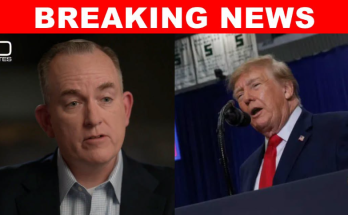
WASHINGTON — Democrats anticipating a sweeping “blue wave” in the upcoming midterm elections may be setting expectations too high, according to an analysis delivered by CNN senior data reporter Harry Enten, who cautioned that historical polling errors could rapidly flip projected majorities in both the House and Senate.
While current public polling shows Democratic contenders holding slim leads in pivotal battleground races, Enten noted on Friday that nearly all of those leads sit well within the historical margin of polling error for competitive Senate matchups.
Present polling averages place Democrats ahead by four points in Ohio, three points in Michigan and Texas, two points in Maine, and one point in Iowa, while Kansas remains deadlocked. While taking all of those contests would hand Democrats the net four-seat gain required to overturn the current 53–47 Republican majority, Enten cautioned that final Senate polling has historically missed actual election outcomes by an average of about 3.7 percentage points.
Because most of this cycle’s key Senate races fall within that 3.7-point window, minor polling variations could dramatically shift the outcome. Enten described the dynamic as a “big siren warning sign for Democrats,” citing recent election cycles where Republican candidates systematically outperformed pre-election polling in critical swing states.
To illustrate the stakes, Enten modeled an outcome where GOP candidates outperform current polling averages by 3.75 percentage points. Under that projection, Republicans would retain the Senate with a 52–48 majority by securing wins in Maine, Michigan, Texas, Kansas, Iowa, and Alaska.
A similar error in House polling would likely enable Republicans to defend their razor-thin 218–214 majority. With Democrats requiring a net gain of four seats in each chamber to claim unified congressional control, shifts across only a small cluster of districts or states will decide the balance of power in Washington.
Enten previously highlighted this trend by pointing to historical polling discrepancies in the Midwest:
-
In 2024, Republicans outperformed September polling averages by nine points in Iowa, six points in Ohio, and five points in Michigan.
-
During the 2018 midterm cycle, Republican results exceeded September polling by six points in Iowa and Ohio, and by eight points in Michigan.
While past discrepancies do not guarantee a Republican polling overperformance this November—as polling methodologies and turnout models evolve each cycle—Enten emphasized that polls serve as informational snapshots rather than definitive forecasts.
The high-stakes nature of the map has triggered historic spending. According to Reuters, more than $3.8 billion has already flowed into political advertising this cycle, with heavy ad buys concentrated in Senate battles across Texas, Ohio, and Michigan.
“The polling has been tight,” Enten concluded, underscoring that the fight for congressional control remains neck-and-neck and that Republicans remain “very much in the ball game.”