Questions surrounding citizenship, foreign allegiances, and national security have emerged as contentious flashpoints in Michigan’s pivotal U.S. Senate race between Democratic nominee Abdul El-Sayed and Republican nominee Mike Rogers.
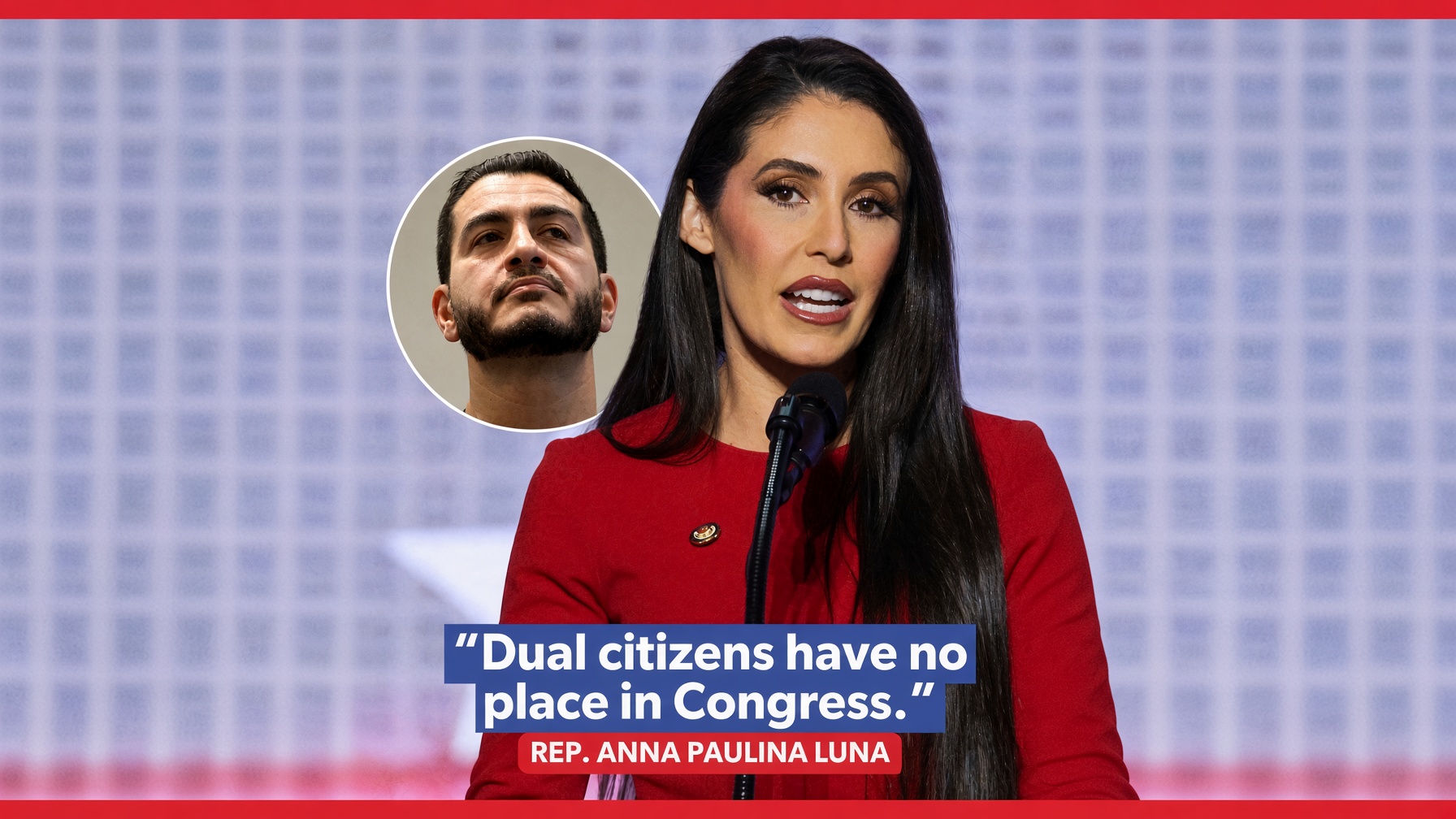
The latest dispute flared after Republican Representative Anna Paulina Luna raised concerns regarding El-Sayed during a televised appearance, calling his background a critical issue for voters ahead of the election. Luna pointed to unverified claims alleging dual Egyptian citizenship, alongside past writings regarding Middle Eastern political transitions and the Muslim Brotherhood.
Addressing the issue of dual nationality, Luna asserted that holding formal allegiance to a foreign state creates inherent conflicts of interest for federal lawmakers entrusted with classified national security briefings and legislative oversight. She maintained that individuals with foreign citizenship should be barred from serving in Congress.
El-Sayed’s campaign rejected the assertions, emphasizing that the nominee—born in Michigan to immigrant parents—holds only U.S. citizenship and has never held dual nationality. The controversy originated from an online academic directory that erroneously noted both American and Egyptian citizenship.
Conservative commentators and opponents have also scrutinized a 2011 article written by El-Sayed examining Egypt’s political unrest during the Arab Spring. Critics have framed the essay as sympathetic toward the Muslim Brotherhood. Supporters and political analysts have pushed back, arguing the document was an objective academic appraisal of regional geopolitical instability, rather than an endorsement of political Islamism or any foreign organization.
The sharp rhetoric reflects escalating stakes in the battle between El-Sayed and Rogers, a former congressman and House Intelligence Committee chairman. Both campaigns are competing vigorously in a battleground state where foreign policy controversies and geopolitical divisions frequently influence voter turnout.
The friction also highlights broader civic questions regarding the thresholds of evidence required when evaluating candidate backgrounds. Under Article I, Section 3 of the U.S. Constitution, Senate eligibility requires an individual to be at least thirty years old, a citizen of the United States for nine years, and an inhabitant of the state when elected. When campaigns advance claims regarding divided loyalties, foreign allegiances, or statutory disqualifications, voters and independent fact-checkers generally look toward official documentation—such as government records, certified birth certificates, and official state department filings—to separate substantiated national security concerns from routine partisan opposition research.