A Decade Later, Hillary Clinton Revives 2016 ‘Puppet’ Debate Clash to Indict Trump’s Russia Doctrine
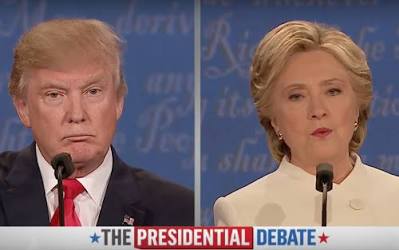
Ten years after an unforgettable clash on a Las Vegas debate stage, former Secretary of State Hillary Clinton is resurfacing her most famous confrontation with Donald Trump, leveraging the moment to mount a fresh critique of his administration’s foreign policy toward Moscow, Kyiv, and the broader international order.
The flashpoint traces back to the final presidential debate of October 2016. When Trump claimed that Russian President Vladimir Putin held “no respect” for her, Clinton seized the opening to deliver an unsparing rebuttal:
“That’s because he’d rather have a puppet as president of the United States,” Clinton retorted.
“No puppet. No puppet. You’re the puppet,” Trump broke in, talking over her microphone.
During that encounter, Clinton cautioned that Trump was primed to adopt the Kremlin’s talking points, implement Putin’s strategic “wish list,” and undercut America’s bedrock commitments to NATO. Trump categorically rejected the premise, denying any financial or personal ties to Moscow and pledging to condemn foreign interference in American democracy.
A 2016 Flashpoint Collides With Geopolitical Realities
Clinton is now drawing a direct line between that warning and current administration actions:
-
Sanctions Relief and Commercial Pacts: She pointed to executive decisions granting sanctions waivers on Russian entities that congressional lawmakers had pushed to maintain, alongside transactional energy arrangements involving Russian diesel shipments.
-
Frontline Communications Friction: Clinton highlighted persistent controversies surrounding Elon Musk’s Starlink satellite connectivity in Ukrainian combat zones and the administration’s handling of the technology.
-
Trilateral Great-Power Talks: The renewed critique follows Kremlin spokesperson Dmitry Peskov confirming that discussions have surfaced regarding a potential three-way summit involving Trump, Putin, and Chinese President Xi Jinping to negotiate the conflict in Ukraine.
The prospect of a great-power summit that bypasses Kyiv has triggered outrage from Ukrainian officials. Ukrainian Foreign Minister Andrii Sybiha warned that cutting Ukraine out of talks over its own sovereignty poses dangerous precedent: while a direct framework involving the U.S., Ukraine, and Russia could expedite a durable settlement, a U.S.-Russia-China trilateral risks emboldening Putin to pursue further territorial expansion.
On the podcast On with Kara Swisher, Clinton argued that Trump operates within an archaic geopolitical paradigm, seeking to partition global leadership into rival spheres of influence: Washington guiding the Western Hemisphere, Moscow dominating Eastern Europe, and Beijing dictating terms across Asia.
The White House has refrained from issuing a new response, maintaining that executive diplomatic strategies are focused on achieving conflict de-escalation and securing American interests abroad.